Monday, 4 May 2020

Learn about United States of America
Some facts about USA:
1. Capital : Washington, D.C.
2. States : 50 states
3. Largest City : New York City
4. National Language : English
5. Republic day : 4 July
6. National Animal : American bison
7. Flag :
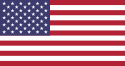
8. Tourist places: Grand Canyon, Niagara Falls, Statue of Liberty, White House, Yellowstone National Park, Walt Disney World Resort, Times Square, Golden Gate Bridge, Las Vegas Strip
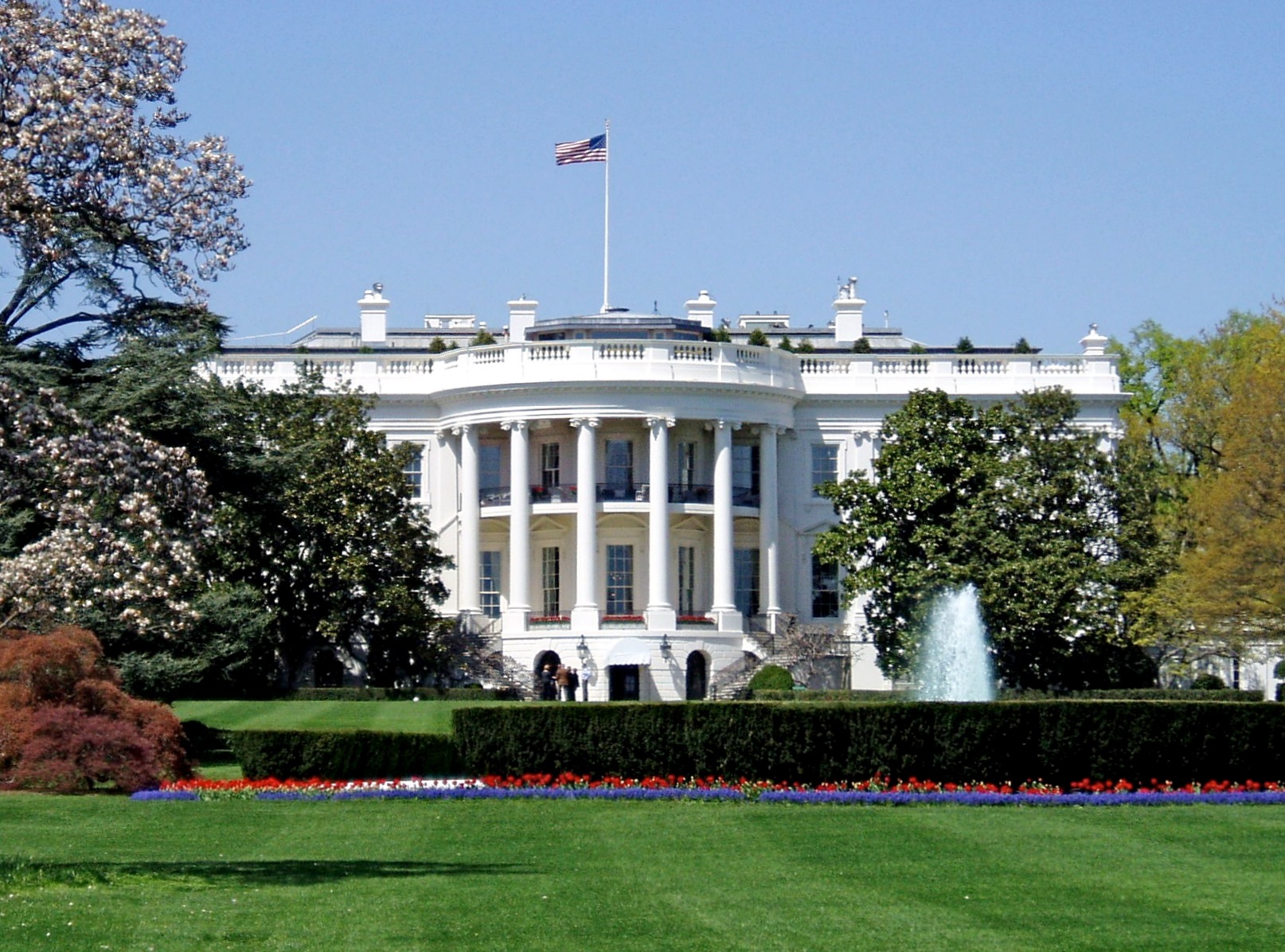
White house

Statue of Liberty
9. Famus Sports : American football
10. Longest river : Mississippi River
GK Questions on Australia
Question: Who among the following discovered the North America?
Answer: Christopher Columbus
Which of the following is highest peak as well as active volcano of North America?
Mt. Mackenzie
Which is the largest fresh water lake in the world?
Lake Superior
Which North American country known as the 'Sugar Bowl of the World'?
Cuba
What is our national motto?
In God We Trust
Where would you find the Statue of Liberty?
New York Harbor, New York City
What is the birthday of the United States of America?
July 4, 1776
How many states are in our country?
50
Which two states were the last to join the U.S.A.?
Alaska and Hawaii
What are the two major political parties in the United States?
Democrat and Republican
On what date did the Revolutionary War officially end?
September 3, 1783
Who was the first president of the United States of America?
George Washington
Which NASA mission first landed men on the moon?
Apollo 11
Who was first to sign the Declaration of Independence?
John Hancock
On what date did the Japanese bomb Pearl Harbor?
December 7
What state is the Liberty Bell located in?
Pennsylvania
How many stars are displayed on the American flag?
50
What is the second most spoken language in America?
Spanish
Who was the first person to walk on the moon?
Neil Armstrong
Sunday, 3 May 2020
Australia
Australia

Australia, also known as "Commonwealth of Australia", is a sovereign country comprising the mainland of the
Australian continent, the island of Tasmania, and numerous smaller islands. It is the largest country in
Oceania and the world's sixth-largest country by total area. The population of 26 million is highly
urbanised and heavily concentrated on the eastern seaboard. Australia's capital is Canberra, and its largest
city is Sydney. The country's other major metropolitan areas are Melbourne, Brisbane, Perth, and Adelaide.
Some facts about Australia:
1. Capital : Canberra
2. States : 6 states and 2 major mainland
Australia has six states—New South Wales (NSW), Queensland (QLD), South Australia (SA), Tasmania (TAS), Victoria (VIC) and Western Australia (WA)—and two major mainland territories—the Australian Capital Territory (ACT) and the Northern Territory (NT).
3. Largest City : Sydney
4. National Language : English
5. Republic day : 26 January
6. National Animal : Kangaroo
7. Flag :

8. Tourist places: Sydney Opera House, Sydney Harbour Bridge, Bondi Beach, Great Ocean Road, Great Barrier Reef Marine Park, Uluru-Kata Tjuta National Park
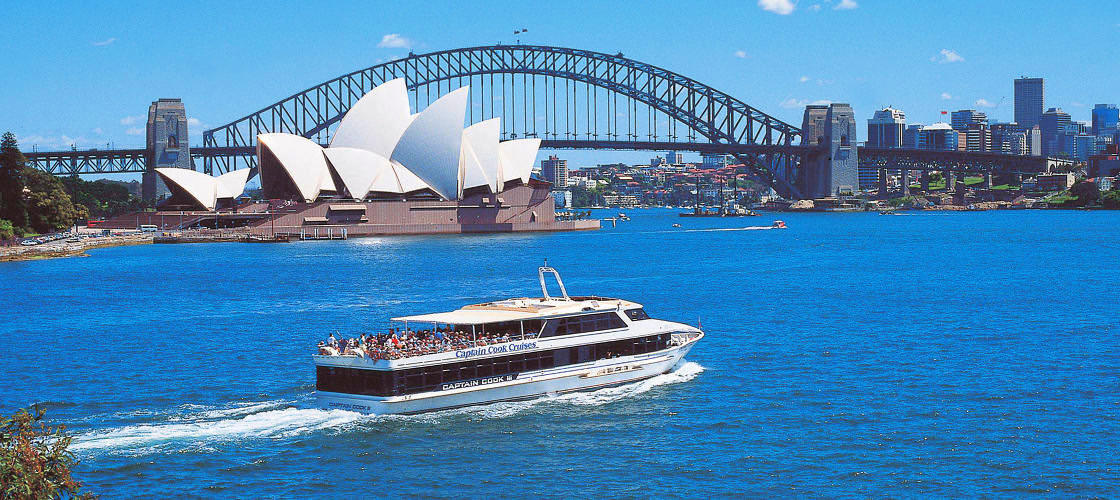
9. Famus Sports : Cricket
10. Longest river : Murrya River
GK Questions on Australia
Question: What is the national animal of Australia?
Answer: Kangaroo
Question: What is the capital of Australia?
Answer: Canberra
Question: Which is Australia's largest river?
Answer: Murray River
Question: Who was the first Prime Minister of Australia?
Answer: Edmund Barton
Question: In which city, famous Bondi beach is loacted?
Answer: Sydney
Question: In which state Sydney Opera house is located?
Answer: New South Wales
Question: What is the highest point of Australia?
Answer: Mount Kosciuszko
Question: What is the national flower of australia?
Answer: Golden Wattle
Question: Which is the second largest city in NSW?
Answer: Newcastle
Question: The Tamar River flows to which Tasmanian town/city?
Answer: Launceston
Question: What is the tallest waterfall in Australia?
Answer: Wallaman Falls, QLD
Question: What is Australia’s largest non-salt lake?
Answer: Lake Mackay, WA
Question: What is South Australia’s largest island?
Answer: Kangaroo Island
Question: Name Australia’s western-most point?
Answer: Steep Point (Shark Bay)
Question: Who designed the Sydney Opera House?
Answer: Joern Utzon
Question: In what year did the Australian National Gallery open?
Answer: 1982
Question: Who was the first Australian to win the Booker Prize?
Answer: Thomas Keneally
Question: In what year was decimal currency introduced?
Answer: 1966
Question: In what year was gold first discovered in Victoria and NSW to begin the “Gold Rush”?
Answer: 1851
Question: How many countries are larger than Australia?
Answer: Five (Australia is the sixth largest country: Russia, Canada, China, USA, Brazil)
Question: What was Sir Donald Bradman’s batting average?
Answer: 99.94
Question: In what city did the Commonwealth Parliament first sit?
Answer: Melbourne

Wednesday, 29 April 2020

Independence Question on Mohandas Karamchand Gandhi
Mohandas Karamchand Gandhi (2 October 1869 – 30 January 1948) was an Indian lawyer, anti-colonial nationalist, and political ethicist, who employed nonviolent resistance to lead the successful campaign for India's independence from British Rule, and in turn inspire movements for civil rights and freedom across the world. The honorific Mahātmā (Sanskrit: "great-souled", "venerable"), first applied to him in 1914 in South Africa, is now used throughout the world.
Born and raised in a Hindu family in coastal Gujarat, western India, Gandhi was trained in law at the Inner Temple, London, and called to the bar at age 22 in June 1891. After two uncertain years in India, where he was unable to start a successful law practice, he moved to South Africa in 1893 to represent an Indian merchant in a lawsuit. He went on to stay for 21 years. It was in South Africa that Gandhi raised a family, and first employed nonviolent resistance in a campaign for civil rights. In 1915, aged 45, he returned to India. He set about organising peasants, farmers, and urban labourers to protest against excessive land-tax and discrimination. Assuming leadership of the Indian National Congress in 1921, Gandhi led nationwide campaigns for easing poverty, expanding women's rights, building religious and ethnic amity, ending untouchability, and above all for achieving Swaraj or self-rule.
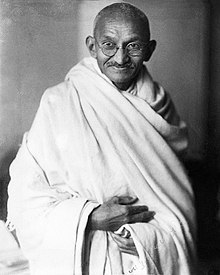
Independece Question on Mohandas Karamchand Gandhi
1.What is meant by the term 'Mahatma'?
Answer: Great Soul
2. What is the main implication of his philosophy? Answer: Means justify the ends
3. What is the full name of the Mahatma? Answer: Mohandas Karamchand Gandhi
4. What is the name of the Ashram that he set up? Answer: Sabarmati Ashram
5. What did Gandhi’s family want him to become? Answer: Dewan (Prime Minister)
6. Where did Gandhi go for his higher studies? Answer: London, England
7. What was the organization that was contemporarily fighting for India’s freedom? Answer: Indian National Congress
8. What was Gandhiji also called in Hindi which means Father? Answer: Bapu
9. Where was Gandhiji born ?
A) Porbander
10.Which is a part of his ideals which he religiously followed ?
A) Truth and Non-Violence
11. What is the meaning of Satyagraha ?
A) Force which is born of Truth
12. What was Gandhiji's wife's name?
A) Kasturba
Indian Independence
Indian Independence
A common story of all freedom fighters in chronological order.

Rebellion of 1857
10 May 1857 at Meerut | Mangal Pandey
The Indian Rebellion of 1857 is an another name of the "Indian Mutiny" where Indian soldiers working in British army refuse to obey the orders. Intersting fact is there were 3,00,000 Indian soldiers compare to 50,000 British troops. This was North India's First attempt to get Independence. It started on 10 May 1857 at Meerut when Mangal Pandey attacked British officer.End of the East India Company, 1858
Empress of India - Queen Victoria
The Rebellion of 1857 was foundation of Indian Independence. British never imagined such a strong opposition from their own soldiers( offcourse Indian soldiers working under British Army). Although British Army suppressed the rebellions in June 1958, but still the Parliament of the United Kingdom removed the right of the British East India Company to rule India in November 1858. The United Kingdom decided to rule India directly through the Governor General (Viceroy). Thus, it included India as a part of the British Empire. Later, Queen Victoria used to call Empress of India. .
Formation of INC, December 1885
Founder of INC - A.O. Hume
British Empire came into existence after Rebellion of 1857. The Governor-General wanted to improve the governance of India with the participation of English-educated Indians. During same time, Retired British Indian Civil Service (ICS) officer Allan Octavian Hume (also known as A.O. Hume) thought to form a group of educated Indians to discuss civil and political situation of India in British Empire. Thus, on 28 December 1885, the Indian National Congress (INC) was founded at Gokuldas Tejpal Sanskrit College in Bombay, with 72 delegates in attendance..Partition of Bengal, July 1905
Governor-General - Lord Curzon
Lord Curzon, the Viceroy and Governor-General of British Raj, ordered the partition of Bengal in July 1905. He justified the partition for improvements in administrative efficiency in the huge region covering Bengal, Bihar and Orissa. However, the Indians took partition as an attempt to disrupt the growing national movement in Bengal and divide the Hindus and Muslims of the region.. Arrival of Mahatma Gandhi, 1915
Gandhi, who?
Mahatma Gandhi studied from UCL Faculty of Law at London. After completing his studies, he went to South Africa to be the lawyer for Abdullah's cousin. He spent 21 years in South Africa. Gandhi returned to India on 9 January 1915. Gopal Krishna Gokhale became Gandhi's mentor.Jallianwala Bagh Genocide, April 1919
Brigadier-General Reginald Dyer
After World War I, British tried to bring reforms in India in 1917. The positive impact of reform was seriously undermined in 1919 by the Rowlatt Act recommendation made by the Rowlatt Committee. The main purpose of Rowlatt Act was to analyse the war-time conspiracies by nationalist. It gave super powers to Viceroy like detaining political activists and arresting people without warrant. to oppose Rowlatt Act, a nationwide hartal (cessation of work) was called by activist. The agitation lead to Jallianwala Bagh massacre (or Amritsar Massacre) on 13 April 1919, in Amritsar, Punjab. The British military commander, Brigadier-General Reginald Dyer, blocked the main, and only entrance, and ordered his soldiers to fire into an unarmed and unsuspecting crowd of some 15,000 men, women, and children. The Non-Cooperation Movement, 1920-1922
Swadeshi movement
The Non-Cooperation Movement was led by Mahatma Gandhi after the Jallianwala Bagh Massacre from 1 August 1920 to February 1922. The main objective was to resist British rule by non-violent (Ahinsa). People opted domestic products instead of British goods. The movement was withdrawn after Chauri Chaura incident where protesters clashed with police. Police opened the fire on protesters and in retaliation protesters set the fire in police station.Purna Swaraj, 19 December 1929
Bhagat Singh and Indian National Congress
The Purna Swaraj (or declaration of the Independence of India) was announced by the Indian National Congress on 19 December 1929. Some sources suggest, Bhagat singh was the first person who gave call for Purna Swaraj (total Independence). This declaration made the Congress and Indian nationalists to fight for one mission that is Purna Swaraj (complete self-rule). Jawaharlal Nehru hoisted Indian flag on 31 December 1929 on the banks of Ravi river, in Lahore, Pakistan. the congress announced to celebrate Indian Independence on 26th January. Azad hind Fauj, 1942
All India Forward Bloc
Subhas Chandra Bose was against India's involvement in World War I. He resigned from Congress due to differences in opinion with Gandhi. He created a separate group called Forward Bloc, later called All India Forward Bloc. British authorities placed Bose in house arrest but he escaped to his way through Afghanistan to Nazi Germany to seek Hitler and Mussolini's help for raising an army to fight the British. Hitler advised Bose to go to Japan. In Japan, Bose formed the Azad Hind Army with the help of Japan. Azad Hind Fauj (along with Japanese 15th Army) fought against British Army and captured Andaman and Nicobar islands. INA failed due to poor resources and surrendered to British Army. Bose escaped to Japanese-held Manchuria and thus, entire Azad Hind movement ended.Quit India Movement, August 1942
Do or Die
Bharat Chhodo Andolan Bharat Chhodo Andolan (or Quit India Movement) was a civil disobedience movement. On 8 August 1942, the Quit India resolution was passed at the Mumbai session of the All India Congress Committee (AICC). Mahatma Gandhi gave a slogan "Do or Die !" for immediate self rule. Gandhi urged Indian's to leave their job's and join the movement. Congress led the movement and demanded the transfer of political power from British. The Quit India Movement turned out a failure and lasted till 1943. Partition of India and Pakistan, June 1947
India got Independence on 15 August 1947 at 12:02 AM
Viscount Louis Mountbatten, the last British Governor-General of India, announced partition of British India into India and Pakistan on 2 June 1947. India celebrated the Independence on 15 August 1947 at 12:02 AM whereas Pakistan celebrated on 14 August. Jawaharlal Nehru became first Prime Minister. Sardar Vallabhbhai Patel became dupty prime minister who bought 565 princely states into Union of India. On June 1948, Chakravarti Rajagopalachari replaced Mountbatten as Governor General of India.
Subscribe to:
Posts (Atom)